

Cracking social media’s code isn’t easy. But Rachel Karten, author of Link in Bio — the #5 business newsletter on Substack — has made a career out of understanding what catches on and why. I’ve long admired Rachel, and not just because we share the same name.
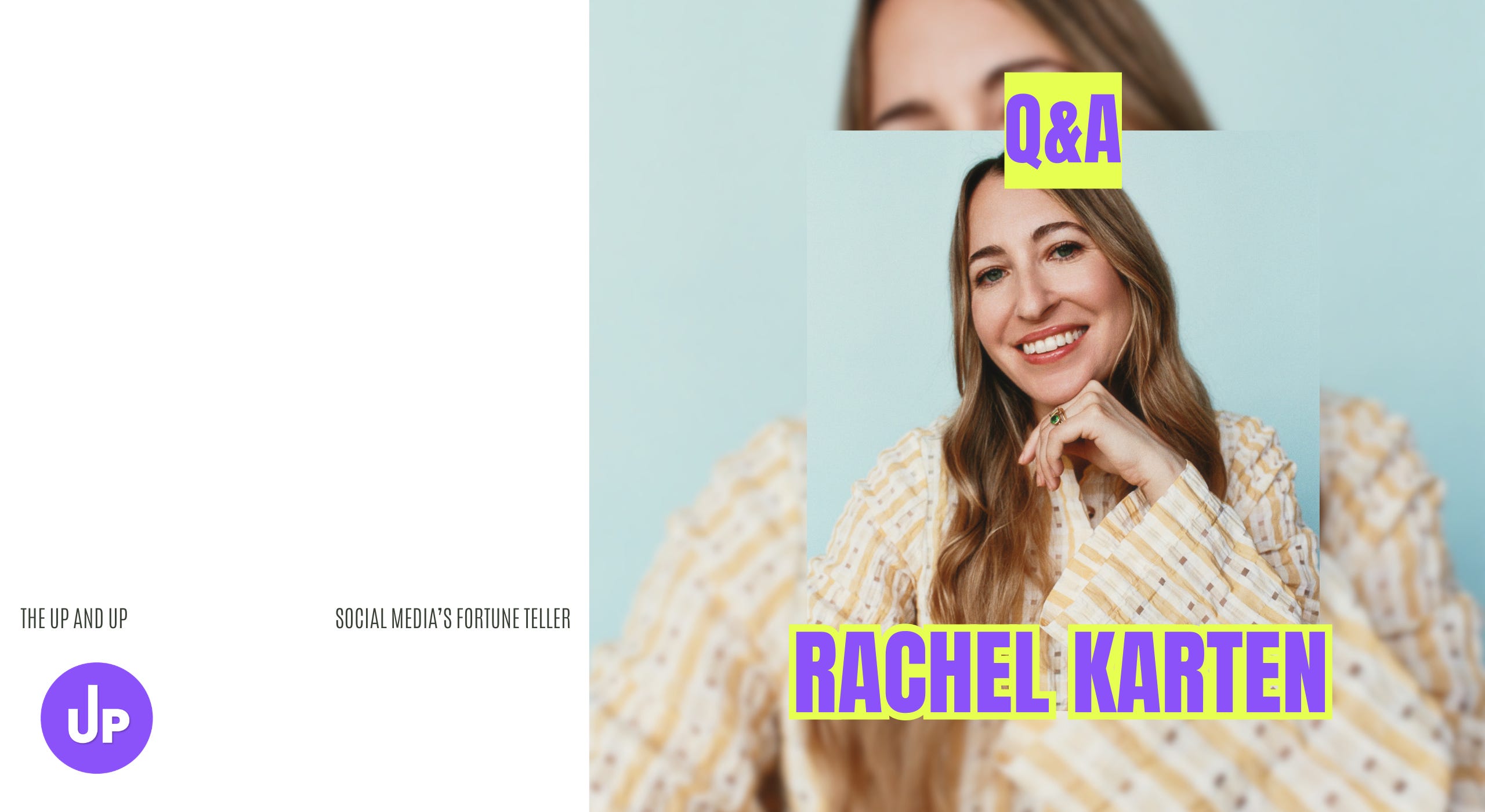
With more than a decade of experience, Rachel has a knack for spotting what’s coming before it hits your algorithm. In Link in Bio, she breaks down the strategies behind the internet’s stickiest campaigns, talks to the people who created them, and makes sense of the trends shaping how we communicate online. She’s consulted for brands including CAVA, Google, and West Elm, helping them figure out how to show up in feeds in ways that actually resonate.
I spoke with Rachel about why the best marketing feels like entertainment, which platforms we’re overlooking, what brands still get wrong about Gen Z, and where she thinks the internet is headed next.
Here’s our conversation, edited for clarity and brevity.
You’ve been writing Link in Bio for five years now, congrats. How has your read on what good social media looks like changed since you started?
RK: That’s a big question. When I think about the algorithm, I think about it as a dial. The algorithm was turned down a little bit more, and it felt like brands could sort of show up as their full selves on social media, and still reach their audience and reach their followers. When I think about the biggest change from when I started writing about it to now, it’s just how much brands have had to essentially become entertainment companies with how they’re showing up. You’re not guaranteed that your followers are going to see your posts, and it’s very much almost starting from scratch as to how to reach people. A lot of brands are continuing to struggle with how to do that.
You touched on the fact that brands are now basically media companies. When do you think that really started in earnest? Because one could argue that’s always been a thing. The medium was just different. When do you think this current iteration of brands-as-entertainment really took off? And what’s pushing brands to operate that way?
RK: When I think about in the past, when it would be brands as media companies, I think it was more in a commercial sense where they would create an ad campaign, and it was to go on television, and it was to entertain a broader sort of new audience. Whereas they could use social to continue to build “community” with existing followers, super fans. In the past few years we’ve seen the shift where, again, you’re not guaranteed that your followers will see your content, so every post is coming from a place of that commercial mindset because how a non-follower reacts to seeing your post is going to determine how your post performs in today’s algorithm. So you’re coming in with an assumption that nobody’s heard of your brand, whereas social media used to come from a place of everyone who’s following me has heard of my brand, and that’s a very different place to market from. In the past few years, you’ve seen that posts need to entertain on this more universal plane than ever before. And of course, then there’s algorithmic or platform features that play into that. You have Instagram creating an area for series and launching a TV app, which hints to brands of, hey, we really like this more sort of serialized, my show is on, mentality to social media, and I think that brands haven’t always been used to creating from that place.
If all brands are media companies, would you say that all of social is now like traditional QVC? It feels like we’re moving in the direction where the thing that comes after short form content is live streams. I just saw that Gruns, the fiber gummy, is hiring a live stream host. Is this where you see the energy going?
RK: I think that there will be sort of a bifurcation of social media in some ways. [Gruns’] hiring a live stream person, I believe, to run their TikTok shop. TikTok shop is a very powerful selling tool for a lot of brands, but when I talk to brands, they think of it as being different than even their brand. It’s a lever they can pull, but I don’t think it’s where a lot of brands want to be known for. They’re still going to do their big campaigns. I think Gruns did a campaign with Lisa Rinna, and it was like this big campaign, and they’re going to keep their TikTok shop strategy feeling very sales forward, and clearly are hiring a person to run it and invest in it. And so, I think that it’s not going to necessarily move into just being live streams, but we’re going to see teams and marketing teams sort of structure themselves to be the lower funnel of sales-driven social media, and then that upper funnel, really entertaining, big swings, campaign driven. What I feel like I’m noticing is that it’s a lot harder for brands to show up in that sort of evergreen way, always on, like posting five times a week, and they all do well type of way. If I think about Gap, who has one of my favorite social strategies right now, it’s them showing up once a month with a big campaign, and the posts in between do well, but it’s not like those have the same fandom around them.
Okay, so Gap is one of your favorite commercial brands right now. If you had to name three, what are the best brands understanding and reaching Gen Z right now?
RK: I mean, I just saw something about Rhode’s numbers of their latest campaign, and I think they’re doing a good job of reaching Gen Z. I think that a lot of brands want to replicate what Rhode has, but they don’t have Hailey Bieber, so it’s not that helpful of an example to give. Gap is another that I would name.
They also have the Hailey Bieber effect (she was in their latest campaign).
RK: Oh gosh, there’s a through line. And then for the final brand, I think that Topicals is doing a really good job, and I think their social is really fun.
(FWIW, we often ask our Gen Z community to name brands doing a good job reaching them right now, and Rhode, Gap, and Topicals have all been mentioned more than once.)
What platform is most underrated for brands right now?
RK: I think something is in the water at Instagram, Facebook right now… which Facebook, I can’t believe I’m even saying, but I think that they are using their own ability to pull the lever on the algorithm to incentivize people posting there. I don’t know if you read Kyle Tharp’s newsletter.
I do. He’s great.
RK: He reported on just how it’s so good [for] political influencers. One made almost $300,000 in a month on Facebook with payouts. So I’m paying attention to those platforms because I’m seeing accounts that have zero followers gain followings really quickly. I think they’re doing something to their algorithm that feels juiced in some way, and so I’m particularly curious about that. I think you used to sort of hear like, “Oh, I’m going to see it on Reels like a month later.” Like I don’t hear that anymore, right?
Agreed. You wrote a definitive list of brands with great social, according to you, which was according to your readers who filled out the survey. To you, what was most surprising on that list?
RK: Fishwife being at the top is surprising to me. I would sometimes think that the biggest brands would rise to the top of a list like that. So, seeing a Dunkin in there, that doesn’t surprise me. But Fishwife, Merit, some of the smaller brands. Another thing that surprised me was just how many brands that were known for their Threads presence showed up. Threads is a very interesting platform to me that I still can’t totally get a grasp on. But there are like a dozen brands that show up very prominently there, let’s say in a sort of “speaking like a human” type of way, and people like it. And I think that was surprising to me to see brands specifically called out for their strategy on that platform.
I was struck by New York City mayor Zohran Mamdani being on that list, because you wouldn’t typically think of a mayor as a “brand,” but part of why he’s so noteworthy to people is because he’s built a brand. Along those lines, what’s the #1 thing politicians or campaigns can borrow from successful brands right now?
RK: This is a very bad analogy that I need to work on, but something I’ve been talking a lot about is like when you are giving your dog a pill, you’ll wrap it in peanut butter or like a treat, right? You’ll hide it in there. And I think what the best politicians are doing on social media right now is taking their message, but finding [their] peanut butter, interesting way in.
I think about like the Abdul El-Sayed video where he’s doing Blue’s Clues, and that that was the way in to something about voter registration. Or Zohran did a take on Chef’s Table, but it was announcing something else about small businesses. And so, what’s that entertaining way in that you’re going to capture people’s attention to then deliver whatever sort of policy information you want.
I talk a lot about ‘The Two Gen Zs,’ and the idea that this generation was split down the middle by a variety of factors, but mainly COVID and tech, like TikTok or now AI. Older Gen Zers have a different relationship to a whole range of things — from politics to tech to authority — than younger Gen Zers, and there are really different ways of resonating with older and younger Gen Zers. I’m curious if you see that split showing up in how brands are talking to this massive generation online?
RK: I don’t think that they’re as good about it as you would probably advise them to be. When I hear from marketing leadership and at places like Cannes Lions, it’s still very much ‘Gen Z as a monolith’ to them. Or a big thing I hear is like marketing leaders who use their kids as the barometer of like ‘my kid told me we should work with this person,’ and so not that that can’t be effective, but that’s that’s one person.
What’s one trend that you think brands will over-index on this fall versus one trend that you think is underplayed?
RK: As the conversation comes around to serialized content, you know, creating a niche, I think brands are going to create more shows on social media, and I think it’ll happen to varying success. I think they’re going to over-index on that, and I’m worried about performance a little bit. If you are going to go in that direction, you have to let go of a lot of the messaging that I think you would typically want to put into a traditional sort of advertisement. And so I will be curious to watch that rollout. In terms of underrated, I think there’s still an overemphasis on volume, and I would love to see brands think about impact per post and not posting as much for you know trying to keep up with the algorithm and more for only sort of like speaking when they have something to say.
I’ve written a lot about a shift to in-person activity this summer. And the appetite for constantly being online is dwindling. How do you see brands meeting the moment online amid a hunger for anything in-person?
RK: Something that I wrote about a while back was this idea of Mister Rogers marketing. This idea that basically understanding the mindset that you’re meeting people at in their scroll right now. And so I don’t think that means talking about analog on your social media, you know, as a way to meet that moment. But more understanding that people are showing up to their scrolls a little bit more exhausted and skeptical, and what type of content might make them feel good in that moment. A lot of times brands would go in that more rage bait sort of like chaotic way, and I think that will not be met in a nice way in this current moment. And so, how can you make people feel good? How can you speak slower and just feel like you’re providing value and joy in their scroll instead of chaos.
Do you see this showing up for individuals online? We did a summer trend prediction newsletter, and one of the trends that came up was more of a desire for following people who are like the girl next door, everyday people, and not influencers. How is that shift showing up in your research of brand marketing? You’ve written about UGC creators. But how are you seeing that shift show up from a brand point of view?
RK: Brands are understanding that their customer or a follower who might not have the biggest audience size is still somebody who you can engage with and have fun with online.I’ve seen examples of customer brand trips. I think that’s an interesting way to turn that on its head. I think that we’re seeing a lot of fatigue, obviously, around brand trips and sort of what they represent. And so, I think that people like seeing brands treat consumers as if they’re influencers. And so, I’m seeing more brands gifting consumers, reserving PR packages for more of those every day people, and so I have a feeling that we’ll see more brands lean into that side of things.
And what brands are getting the IRL plays right right now, bringing their online strategy offline?
RK: There’s multiple ways that I’m seeing that. On one hand, I thought that Ramp’s stunt with Brian Baumgartner live streaming it, having people show up in person, feeling like there’s a social currency to capturing it themselves, was really smart. And so there’s sort of this more stunty way of showing up in person. And then there’s the more sort of intimate ways of gathering community. I don’t remember it completely, but I know Alix Earle invited her consumers of her brand Reale Actives over to a hotel night, and I thought that that was really sweet. And it wasn’t about scale or volume of posts; it was more about intimacy. And I think that that was intriguing to me, especially for somebody with her sort of like scale.
And lastly, what is your weekly screen time?
RK: 6 hours 54 minutes.
Noteworthy reads
Entrepreneurship is booming in the U.S. Gen Zers are leading the way., Mary Cunningham for CBS News
Gen Z-ers Dress Like They’ve Never Worn Clothes Before, Thomas Morton for The New York Times
When Mom and Dad Are a Little Too Involved in Gen Z’s Jobs, Celia Bernhardt for The Wall Street Journal
Gen Z is Testing the Limits of How Weird Parties Can Get, Victoria Feng for The Atlantic
So great to chat!
What an addition. She’s awesome and beautiful .