

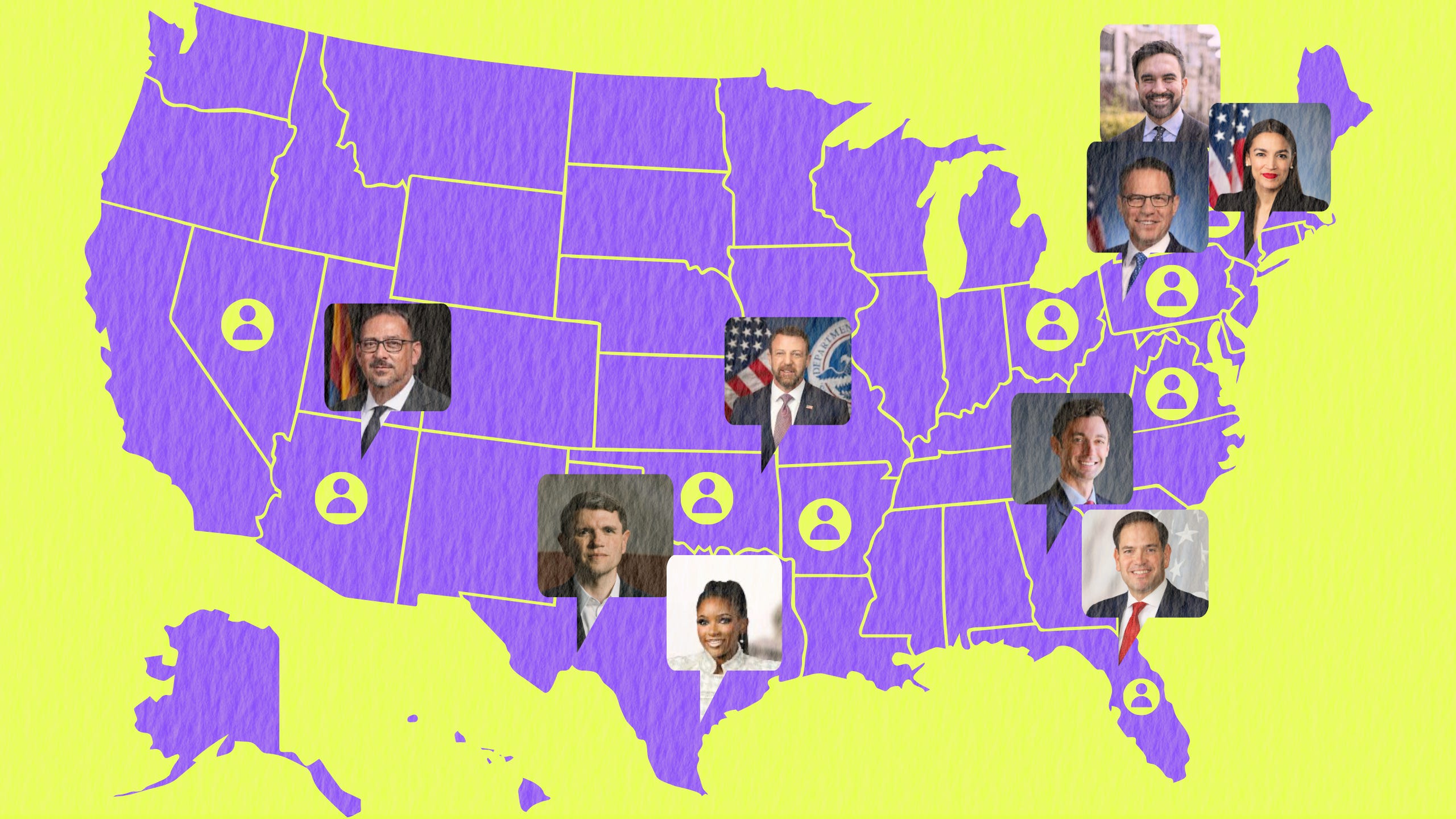
Last week, I held a focus group with 16 young voters from across the political spectrum and country — they were all between 18 and 25-years-old, so they’re mostly part of Gen Z 2.0, the younger half of this increasingly influential bloc. It was the latest in a series of political focus groups we’re running before the 2026 midterm elections. Participants flocked from Ohio, Nevada, Virginia, New York, Pennsylvania, Arkansas, Oklahoma, Arizona, and Florida.
My biggest takeaway is just how swingy our generation has become.
We know that 56% of Gen Z calls themselves independent, thanks to recent Gallup data. We’re now seeing that play out in real time as young voters describe how their politics have shifted since 2024.
There’s been plenty of focus on the young men who’ve shifted away from President Donald Trump — but those aren’t the only young voters’ whose politics are in flux.
When I asked the group how their politics shifted since 2024…
The right-of-center voters on the call said they’ve shifted slightly left, thanks to immigration enforcement and Trump abandoning key campaign issues. And some of the left-leaning voters on the call said they’ve become more critical of their own viewpoints, moving away from “group-think” and a leftist mentality. They said they’re willing to be more conciliatory “to the other side.”
By this point, I think it’s widely understood that Gen Z is anti-party establishment and rejects traditional party labels. But many still underestimate how unorthodox Gen Z voters’ thinking is — and how willing they are to take a little from both parties while largely rejecting the polarization that’s plagued the country for their entire adult lives.
They’re not interested in a candidate who fits neatly into partisan boxes or is willing to parrot party talking points.
Other key takeaways
The politicians they say are doing a good job (Mamdani, AOC, and Marco Rubio were the most popular names)
Why they’re are resonating (they’re hyper-visible and symbolize a next-frontier type of politician)
AI is officially a political issue (there’s a strong appetite for regulation around data and privacy, age verification for minors, labels on AI-generated content, and limiting water for data centers)
Intimacy with local politics (it’s not lost on them that’s where the decisions that affect their lives are made, from rent/housing to education and yes, data centers)