

From the horrific shooting at Brown to the terror attack on the first night of Hanukkah in Bondi Beach and the death of the beloved Rob Reiner and his wife Michelle, the level of tragedy this past weekend was chilling.
We are surely in the midst of another Gloomcycle, the word I use to describe the all too familiar feeling of being trapped in a period of one horrible headline after another — something that is increasingly common, incredibly concerning, and potentially numbing.
People ask what makes gen z different. Every generation faces crisis. But ours experiences violence and hate almost daily, live-streamed in real time. Truth is, we don’t know quite yet what that nonstop exposure does to a generation.
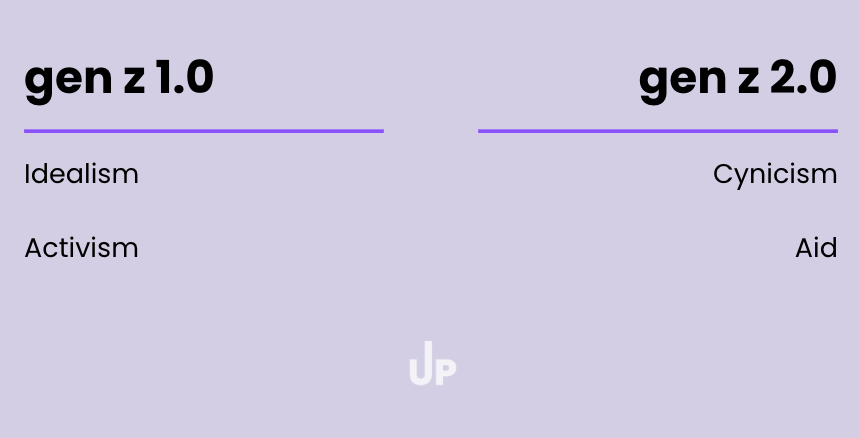
I’ve thought a lot about the shift that’s unfolding within gen z, from the idealism of gen z 1.0 to and a bubbling sense of cynicism within gen z 2.0 that percolates when it feels like nobody is listening and everything is getting worse.
Conventional wisdom says young people are inherently optimistic and the vanguard of social change. But what happens to that optimism when young people grow up amid chaos and despair: school shootings, war, climate disasters, political violence and extreme partisanship, and a pandemic?
Contrary to what some may believe, gen z is not wholly nihilistic. But this generation is used to violence and frustrated by a system that feels like it’s not listening to or addressing their concerns. Their relationship with activism is changing as a result.
Between 2010 and 2020, youth-led social activism was trendy. Now, instead of marches in the street that call on political and business leaders to actualize change, young leaders are impatient and looking to directly impact outcomes themselves. That can manifest a few different ways, and it’s not all positive. On one hand, we’re seeing an alarming generational divide in tolerance for political violence as a means to an end. But on the other hand, there’s a growing appetite for mutual aid.
After the Los Angeles wildfires last winter, the Altadena Girls — a group of teens — mobilized resources to help girls like them recover in the aftermath of destruction. A year later, the group opened a community center to keep the impact going. In response to national ICE Raids, there’s been a push to fund legal services to help immigrants. And after the fall of Roe v. Wade, there’s been a concerted push to contribute to abortion funds.
Yes, No Kings Protests have drawn large crowds in the Trump 2.0-era. But young people have largely sat those out. Who can blame them? Gen Z 2.0 looks at The March For Our Lives, Black Lives Matter Movement, climate strikes, and protests for reproductive healthcare access and sees a country still suffering from the toll of gun violence, racism, climate change, and the fall of Roe v. Wade.
At a time when so much feels broken, young people are looking for innovative ways to rebuild. In lieu of activism, this year, mutual aid and nonprofit giving have become a popular way to contribute.
The section below is sponsored by GoFundMe, the leading crowdfunding and fundraising platform.
As the first generation of digital natives, Gen Z’s relationship to giving (and activism, for that matter) is tightly interwoven with social media. To learn more about the unique way Gen Z is engaging in fundraising and giving on GoFundMe’s platform, we heard from Margaret Richardson, Chief Marketing & Corporate Affairs Officer at GoFundMe.
Our Q&A is below, edited lightly for clarity and brevity.
We’ve noticed a shift in how Gen Z takes action on issues in their community and lives. It seems like in 2025, many are turning to mutual aid and sharing resources, rather than protesting and rallying. How, if at all, is that reflected at GoFundMe? And where are you seeing their energy go from here?
MR: At GoFundMe, we have a front-row seat to how generosity is evolving and how the next generation of donors want to give. Our community of over 200 million — many of them Gen Zers — show us that for younger generations, giving is not just about donating to the causes that matter to them; it’s also about taking action, mobilizing their networks and creating tangible change.
We see Gen Z on our platform taking action in ways that are unique from other generations, but they’re also donating to certain causes and categories at much higher rates compared to other generations. Though Gen Z’s median donation amount over the past 12 months was $150, slightly lower than other generations.
Notably, Gen Zers are highly responsive to current events. Gen Z and Millennials are upwards of 50% more likely to be motivated by news events than older generations and we see that play out in real-time during crises.
For example, we’re seeing them give to organizations like World Central Kitchen and other organizations helping with humanitarian aid. When the LA Wildfires hit, more than $265 million was raised on our platform within months with the help of contributions from Gen Zers, many of them small dollar donations. Nearly 60% of all donations to the LA Wildfires on our platform were through donations of under $100 each.
Gen Z is mobilizing digitally, pooling resources, helping each other directly and supporting the causes that matter to them. Recent survey findings show that the top causes and categories Gen Z donates to on GoFundMe are to Emergency (48%), Crisis and Disaster Response (46%), Medical fundraisers (46%), and Nonprofits (44%). However, Gen Z donates to causes and categories, like Social Justice and Civil Rights, Essentials and Care (which includes things like disability and elderly care), at much higher rates compared to other generations. Gen Z is more likely than all other generations to donate to Social Justice and Civil Rights fundraisers on GoFundMe – 7 percentage points higher than Millennials, 14 percentage points higher than Gen X and 19 percentage points higher than Boomers. This shows that they are actively engaged in driving real change and reimagining what collective action looks like in the digital era.
In addition, roughly one in three Gen Zers who’ve engaged with fundraisers in the past two years on the GoFundMe platform say they’ve supported community-based causes — like helping the homeless or donating to local youth programs — reflecting a strong sense of shared responsibility for the well-being of those around them. That extends to people they don’t even know. Fifty one percent of Gen Z say they have donated to a stranger online, which is on average 12 percentage points higher than other generations.
Along those lines, what qualities are you seeing from Gen Zers on your platform that feel unique to their cohort?
MR: Gen Zers are community-oriented, impact-driven, and digitally native in ways that shape how they engage with causes and differentiate them markedly from other generations. Many Gen Zers make their first-ever donation on GoFundMe, and they’re also launching challenges to fundraise and rally support for causes they care about. Over the past year, many challenges have been created on our platform, with 50,000 challenges alone created to benefit the American Cancer Society. For example, with the help of her mom who set up her fundraiser on GoFundMe, 16-year-old Caroline Karellas swam 100 miles in 30 days and raised over $19,000 for the American Cancer Society, winning the American Cancer Society challenge.
Gen Z’s activism is also deeply social. Our Social State of Giving report found that Gen Z is 10 times more likely than Boomers to share that they donated on social media, nearly half believe sharing donations publicly helps inspire others and 41% say social media content has inspired them to research or donate to a cause, compared to just 25% of Millennials and 20% of Gen X.
On GoFundMe, every time an organizer shares their fundraiser, it can help drive an additional $100 toward their goal, on average. Our impact links displayed on GoFundMe Profiles let users see the ripple effect of their actions in real time – proving that creating change isn’t just about how much someone donates, but how they can rally others. For Gen Z, giving isn’t confined to donation pages — it’s happening right in their feeds, in real time, where their communities already live.
We’ve also seen Gen Z and Millennials show up in new and interesting ways on our platform. For example, Tess Bohne — known for livestreaming Taylor Swift’s Era’s Tour concerts — raised nearly $34,000 from Swifities on GoFundMe for Coburn Place, an Indianapolis nonprofit that helps survivors of domestic violence. (You can read more about it here.) That was just one of several fundraisers she has organized, raising funds from Swifites to benefit various nonprofit organizations and relief efforts. In addition, more than 30 nano and micro creators came together just a few months ago in an organized Creator Raid Train; a 4-day long marathon fundraising event to support Blizz, a Gen Z Twitch Streamer, and a GoFundMe fundraiser raising money to support Blizz’s personal fight against cancer. The Raid Train raised $7,400 of the more than $80,000 raised on GoFundMe to support Blizz.
Based on the causes and categories Gen Z supports and the way they engage and activate on our platform, we see a generation channeling its activism into direct, personal, and community-rooted action. Gen Z’s generosity is immediate, personal, participatory, and deeply woven into their digital lives. To meet them where they are, GoFundMe continues to invest in AI-powered sharing tools, livestreaming fundraising tools, and creator partnerships — making it easier than ever to turn awareness into action.
Your research shows that GoFundMe’s brand recognition is exceptionally high amongst Gen Z. Why do you think that is? And how are you working to further engage them?
MR: Our latest data shows that GoFundMe’s brand awareness remains incredibly strong — around 90% aided awareness in Q2 2025 — and it’s growing fastest among Gen Z. In fact, unaided awareness is now highest among Gen Z and has increased significantly year over year.
That awareness is largely driven by the role GoFundMe plays in moments that matter most to them — from driving donations to support recovery and relief efforts during natural disasters to rallying support for personal causes shared online. Gen Z doesn’t see GoFundMe as just a fundraising tool; they see it as a platform where they can directly express and create positive change in the world.
To deepen that engagement, we’re investing in new, participatory ways for young people to give. This includes things like challenges, which encourage viral generosity, and Giving Funds, GoFundMe’s fee-free, modern take on donor-advised funds (DAF). Today, only about 1% of Americans have a DAF, but with Giving Funds, we’ve removed traditional barriers to entry — like fees and minimum donations — to encourage anyone, especially younger generations, to participate and build a habit of giving. Combined with creator partnerships and AI-powered sharing tools, we’re meeting Gen Z where they are — turning awareness into sustained, community-driven giving.
Gen Z’s connection to GoFundMe is also shaped by where they spend their time. This group is far more active on social platforms like TikTok and Instagram, and they encounter GoFundMe there — both organically and through our own content — much more than older generations.
We’ve seen Gen Z blur the lines between giving, organizing, and influencing — often mobilizing their networks online quickly, often to donate. How is GoFundMe adapting to this more fluid, community-driven model of generosity
MR: We are building products specifically with Gen Z in mind. For example, we recently rolled out GoFundMe Profiles, which is a centralized hub for individuals to showcase their impact, celebrate causes they care about, and rally their community around shared values.
We’ve also built AI-powered fundraising tools, so organizers can now start fundraisers in seconds, leveraging AI writing support, story coaching, and step-by-step guidance to help them capture attention and build momentum in the early stages of their fundraising.
GoFundMe has also launched social and live fundraising tools. With live-streaming integrations, social sharing templates, and features like social challenges, giving can happen natively on the platforms where Gen Z already builds community.
And with Giving Funds, our modern take on donor-advised funds, we’ve lowered the barrier to entry so anyone can now give to nonprofits and mobilize others instantly around trusted causes. And soon, we’ll have more to share on how we’re enabling influencers to leverage their Giving Funds to rally their networks and communities to drive more support.
GoFundMe is also supporting the creator-led ecosystem. Gen Z’s giving habits are deeply intertwined with creator culture. 51% of Gen Zers say they would trust impact creators to make donations on their behalf. Our Creator Program brings together 100+ “impact creators,” storytellers who use their platforms to mobilize audiences for good. We equip them with dedicated community spaces, like our Creator Discord for collaboration and knowledge-sharing. We also give them early access to beta tools, live fundraising features, and custom impact profiles. And we direct support from GoFundMe’s media and partnerships teams to amplify trending stories. Creators like Jimmy Darts and Kalina Silverman have inspired millions of dollars in donations through authentic, cause-driven storytelling. They remind us that authentic storytelling sparks action, and GoFundMe is where that action becomes tangible help. We’re built for moments when generosity spreads fast and people want an easy, trusted way to make a difference.
GoFundMe is evolving from a platform for one-time fundraisers into a living, community-powered ecosystem, where generosity grows through connection, collaboration, and shared purpose. We’re giving Gen Z the tools and support to turn their influence and communities into real, ongoing impact.
For readers of The Up and Up
This holiday season, GoFundMe is leaning into its ‘Giving Funds’ initiative, its very own donor-advised fund meant to make giving more accessible for more people. In setting up a ‘Giving Fund,’ GoFundMe users set aside money for future nonprofit giving, making them eligible for an immediate tax deduction. They can choose to distribute these funds at a later date.
GoFundMe’s Giving Funds are:
free to open
have no management fees
no minimum contribution requirements
and enable donations as low as $5
You can read more about the initiative here.
As part of today’s sponsored edition, GoFundMe is offering readers of The Up and Up an incentive to open their own Giving Fund. If you 1) open a Giving Fund and 2) add $25 or more to your Giving Fund, 3) GoFundMe will add an additional $25 to your Giving Fund. If you have a Giving Fund but have never contributed into it, you can also participate. The deadline for this incentive is Dec 21 at 11:59 pm PST.
To get the incentive, use this link to start your Giving Fund. Please reach out with any questions.
In other news
Noteworthy reads
‘The More I’m Around Young People, the More Panicked I Am’, Yair Rosenberg for The Atlantic
Love is an Online Battlefield, Mary Julia Koch for The Wall Street Journal WSJ Free Expression
How Millennial Cringe Became Millennial Optimism, kate lindsay for Slate featuring Casey Lewis
‘We’ve Been Let Down’: 11 Gen Z-ers on the Military, America’s Place in the World and Their Generation, Katherine Miller, Kristen Soltis Anderson , Adrian J. Rivera for The New York Times