

It’s time to get back to reality.
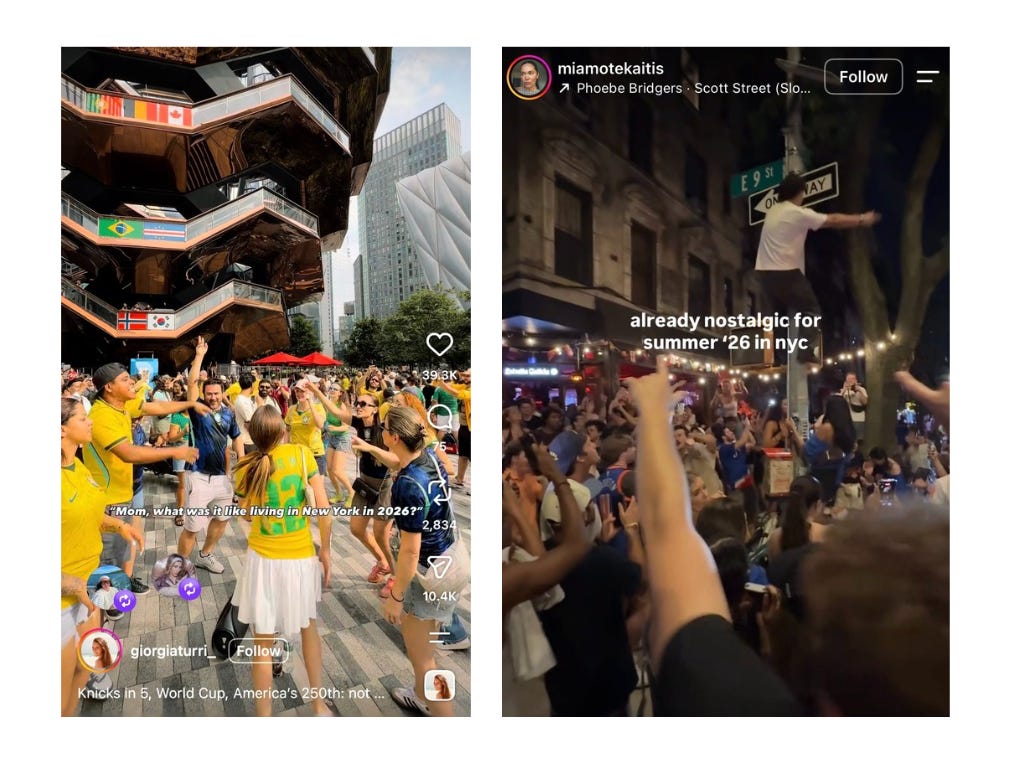
After a very IRL summer, young people are headed back to school, back to work, and soon, back to the ballot box. These past few months gave us plenty of shared moments. The country rallied around the Knicks who won in five and sent New Yorkers to take the streets. Americans packed bars and public spaces for the World Cup. There were block parties, Love Island watch parties, and Gen Z boom at movie theaters.
But the most interesting thing about this summer wasn’t any one cultural moment. It was where young people seemed to be finding them. After years of life increasingly shaped by feeds, platforms, and algorithms, young people seemed increasingly drawn to things they could choose and shape for themselves, from their hobbies and social lives to their local communities.
We wanted to see where young people are putting their time, energy, and money as we transition into the fall.
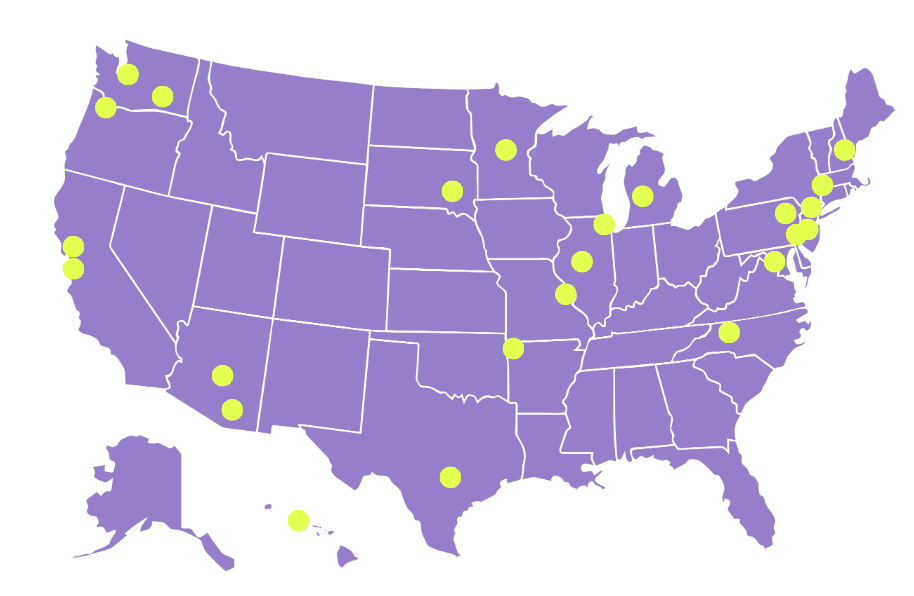
So we checked in with them through a series of focus groups and reality checks — our qualitative, community surveys. Overall, we heard from nearly 100 young people, ages 15-31, from 21 states and Washington, D.C.
As we move out of this IRL summer and back to school, work, and — yes — the upcoming midterm elections, we focused our research around three main buckets:
Their social lives
Their personal finances
And their top issues, across topics like politics and AI
Broadly, what we heard is that young people want more control over their own lives. After years of being told what to watch, buy, think and care about, they’re increasingly skeptical of anything that feels decided for them, whether by an algorithm, a tech company, a political institution or someone with a massive following. Instead, they’re gravitating toward the people, places and choices where they feel like they have a say.
Our findings break down into five core themes:
Community is culture. Everyone’s an expert in their own community. From restaurants to concerts and even politics, we’re underestimating Gen Z’s appetite for everything local. This fall, this is where the action will be. People still want belonging and shared experiences, but they’re not looking to recreate what everyone else already has.
It’s the anti-algorithm era. Analog energy continues. Tired of being fed everything from how to think to what to wear, young people are ditching the algorithm for their own sense of self, allowing offline and in-person energy to shape how they spend their time. In turn, there’s power in everything from run clubs to cook-book groups and mahjong nights. While posting with a niche influencer was a savvy political tactic in 2024, the opportunity now is the community itself — the run club, the salsa night, the neighborhood organization. In short, influence is shifting from people with audiences to people with communities.
Powerlessness is driving distrust. Distrust in institutions is really a frustration with who gets to make the decisions, as a small group of people, companies, or algorithms make choices that shape everyone else’s lives, and everyone is expected to accept them. AI is the clearest expression of that dynamic. Nobody asked for an AI future but it’s increasingly embedded in work, school, and everyday life. Gen Z is not anti-progress but they’re skeptical of progress that happens to them rather than with them.
We’re in a post-culture war period. The issues breaking through with young Americans are increasingly material (inflation, war, cost of living, AI, corruption) vs symbolic (culture wars, pronouns, civil rights). Many of the politicians breaking through are speaking directly to those concerns (e.g. Zohran Mamdani, James Talarico, Jon Ossoff, Alexandria Ocasio-Cortez, Marco Rubio).
And there’s a hunger for people-driven politics. All of this boils down to a central theme. Young Americans are rediscovering community as a source of power. And when it comes to their politics, they’re deliberately routing civic energy offline. When national politics feels impossible to influence, the places where people can actually see their impact become more important.
READ OUR FULL REPORT, THE COUNTERCULTURE IS HUMAN, HERE.
Many thanks to The Up and Up’s summer interns, Abbey Locker and Emilia Kim, for their instrumental work on this report.
Noteworthy reads
The Real Political Divide Isn’t Between Boomers and Gen Z, Rep. Maxwell Frost, Rolling Stone
The Myth of Workplace Readiness, Amanda Hoover for Business Insider
Shocking number of Gen Z shut-ins report zero face-to-face human interactions per day after COVID, Anthony Blair for The New York Post
And a watch/listen
I joined Vox’s Astead Herndon on America, Actually to break down some of the biggest trends in Gen Z politics. We dug into their top issues, why their politics are so swingy, and what’s on the other side of the gender divide. Check it out:
You are so right Rach I couldn’t agree with you more.