

In the last 15 years, young adults’ wellbeing has plummeted. That’s based on new data from Gallup — which shows young adults’ “life ratings” down 20 points since 2010. The steepest plunge was at the start of the pandemic, and Gen Z hasn’t recovered.
A 20-point drop in young adults’ well-being since 2010
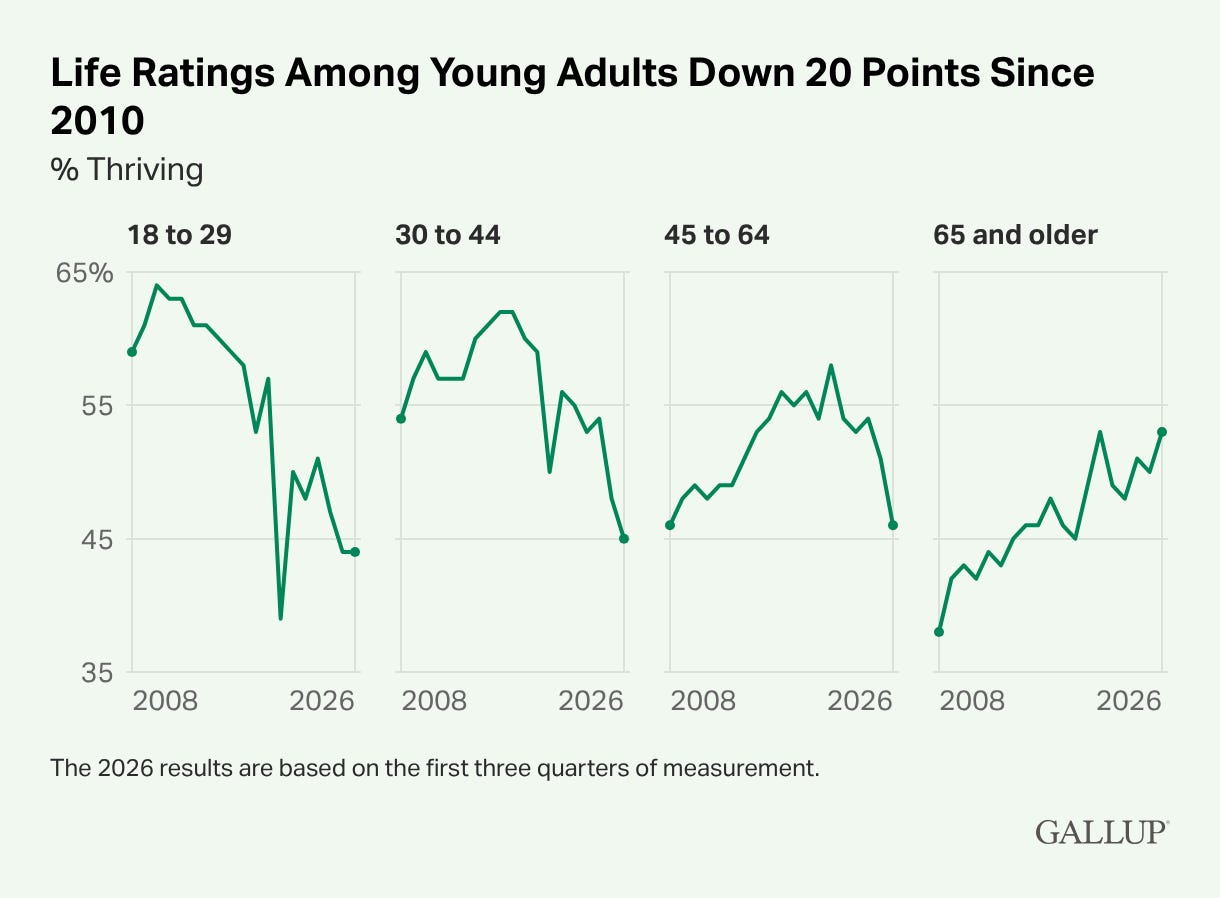
But this isn’t a Covid story. It’s about technology. Something important happened at the start of Covid — Gen Z’s TikTok use surged and the algorithmic for-you-page revolutionized social media for good. Enter the endless scroll.
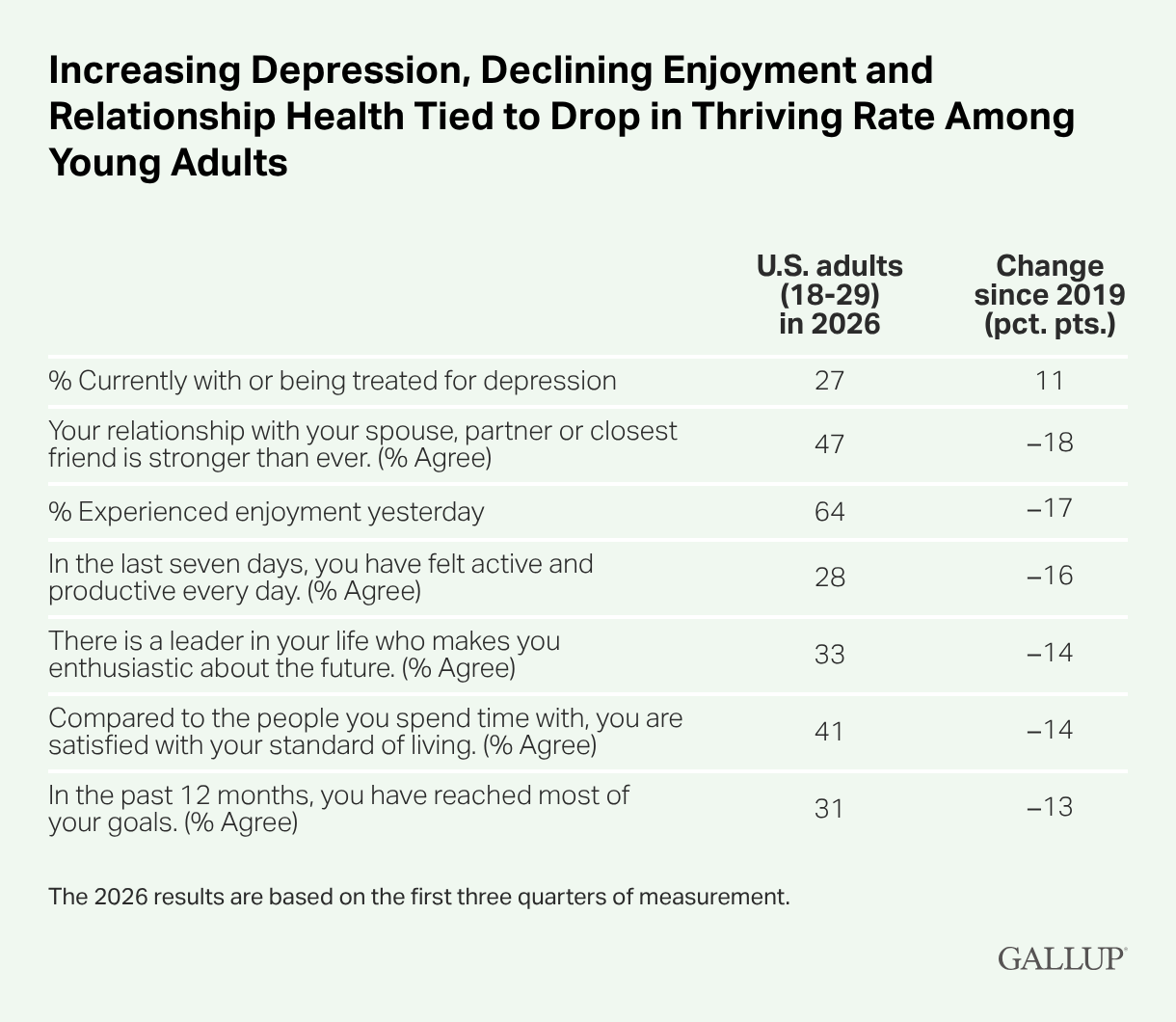
Here’s the takeaway: This generation is ready for relief.
They know they’re unwell, they just don’t know how to fix it. Every young person I talk to is searching for ways to improve their mental wellbeing, but it’s hard when the entire economy is centered around the very tech they blame for their misery.
This has created a palpable sense of nostalgia among Gen Z, which has manifested in this generation’s culture, fashion, art, politics, social lives and obsession with the year 2016. This hunger for a ‘before-time’’ has also led to a rebuke of technology (mainly algorithms and AI) in exchange for a generational obsession with everything in person or around other people.
*Read: Are lines the new third space? or The summer Gen Z learned how to have fun*
As our intern Emilia writes:
The way I see it, the drop in young adults’ life ratings tells a bigger story. It’s only a foundation for understanding how my generation is feeling, helping to explain the counterculture taking shape around us. This summer, we saw in-person events trending, and it’s obvious to me why so many of us are over-valuing those experiences. When connection is slipping, we hold on tightly to showing up in person, as a way of taking back what the data says we’ve lost. It seems that’s the age we are in now; this fall, I’ve seen “phone-free” yoga nights, craft-ernoons, and hiking trips all over my college campus. Having participated in them myself, I can faithfully attest that there’s a stronger form of connection that emerges without the social crutch of a phone. People are choosing these activities over scrolling to rebuild community with intentionality, and I’d argue that’s a part of the story we need to pay more attention to.
Every generation of twenty-somethings faces its share of conflict, crisis, and economic instability. Millennials came of age in a recession, when the job market was notoriously bad. But data point after data point shows that Gen Z feels worse off — even since just six years ago.
Along with Covid came a buzzy conversation about mental health and it’s now far more socially okay to not be okay. That, of course, has its pros. It also means members of Gen Z may be more willing than prior generations of young adults to admit the pitfalls of their personal plight. Our generation has a reputation for being blunt, speaks off the cuff, and with little filter (a tone that’s incentivized on the platforms and by the very algorithms that have dictated our lives for the past six years).
Covid scarred this generation in ways we’re only starting to understand. But it’s really not just Covid. It’s the never-ending news cycle, economic anxiety, AI anxiety, inflation, threat of war, and political chaos that’s followed. Plus, there’s the constant comparison of ourselves to our peers across every metric of “success” — work, school, our social lives, physical appearance, and even ironically our mental health.
To better understand why Gen Z teens and twenty-somethings today feel worse off than the generation that came before them — and to hear their ideas for solutions to get out of the funk — we went straight to the source.