

Lately, I’ve been asking young adults a new question: Can you describe your life pre and post AI. What are the biggest changes? The results are stark.
We know that Gen Z is AI-anxious. Early career job openings are dwindling. In 2025, just 30% of college graduates landed a job in the field they hoped for — an 11-point drop from the share who did the same in 2024.
Understanding these dynamics, I teamed up with Lori Cashman of Visible Ventures — an early-stage venture fund focused on health, wealth, and upward mobility — to unpack what the transition to adulthood looks like today for young adults. The result is a report on “Generation F*ck It,” which you can read here.
(You may remember last year, when Lori and I worked together to grasp how young adults were spending, saving, and investing.)
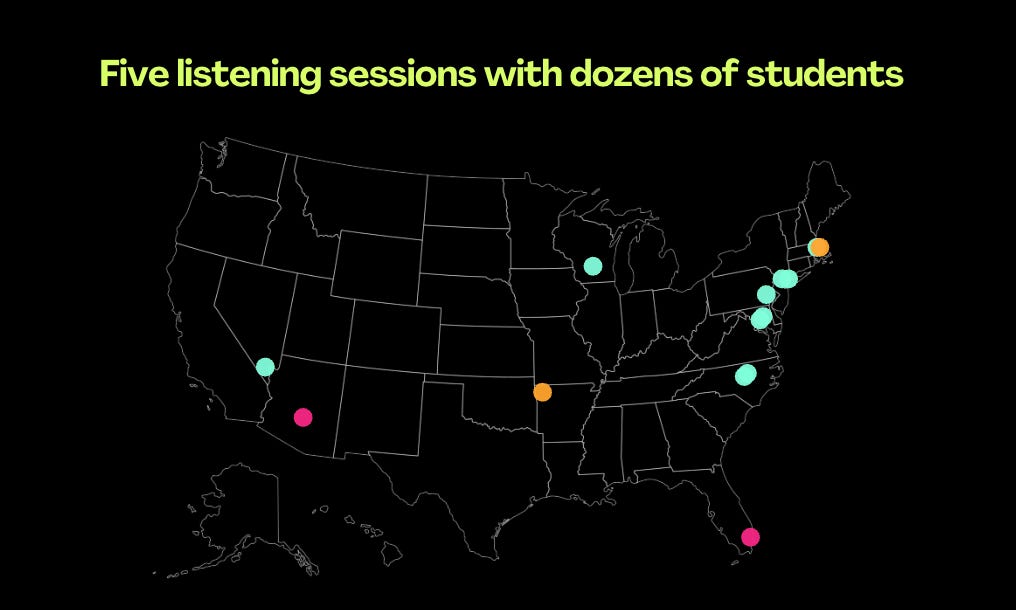
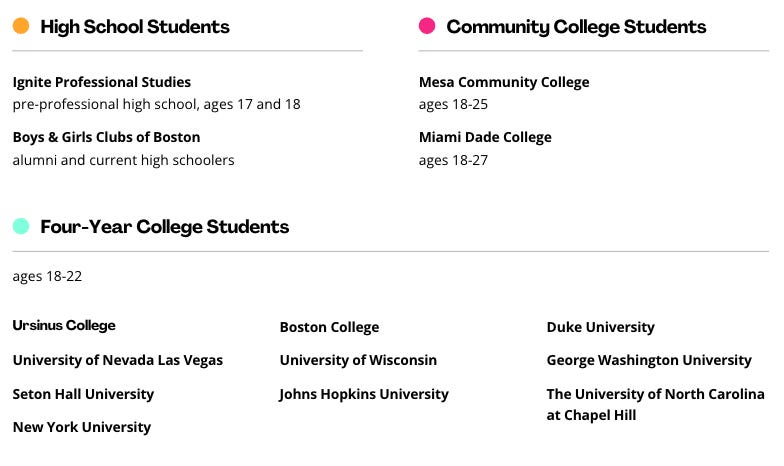
This time around, we were squarely focused on life preparedness and the future of work. We spoke with more than 50 students and early career professionals from Ignite Bentonville, a pre-professional high school in Arkansas, the Boys and Girls Clubs of Boston, Mesa Community College, Miami Dade College, and a range of four-year universities.
The problem with preparation
What we found was that despite *plenty* of discourse about how “unprepared” today’s young adults are for our changing world, that’s not actually painting a full picture.
Truth is, young adults today are preparing more than ever before — stacking their resumes, applying to dozens of jobs, and building their own “brand” in hopes of standing out from the pack.
Many of them are following a carefully prescribed pathway — taking pre-requisite courses, applying to internships they feel they’re supposed to have, rather than embracing the everyday jobs they already have (most students are working their way through college), and climbing the rungs of a ladder that no longer leads where it used to. In fact, they’re preparing too much, and experimenting far too little.
We’re calling this Gen Z’s preparedness paradox — the challenge of gearing up for a future that’s changing in-real-time with little incentive from institutions and stakeholders to take a risk, stop preparing, and start living.
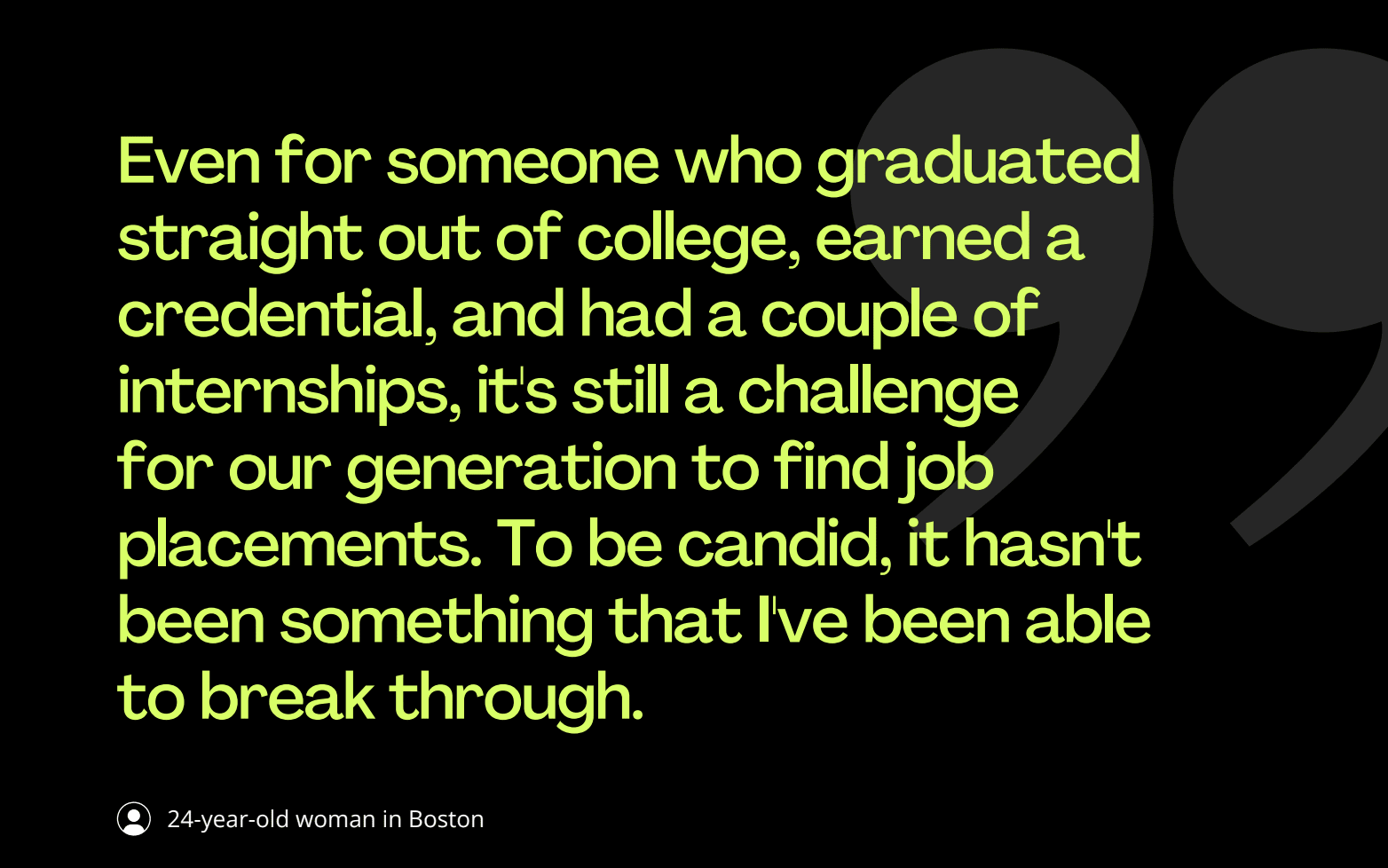
Thinking about the macroeconomic impact here, failing to foster risk-taking is not only a disservice to a cohort of very creative young people — it’s also undermining the possibility of a strong and thriving future workforce ahead of a massive generational wealth transfer that will fall squarely into the hands of Gen Z.
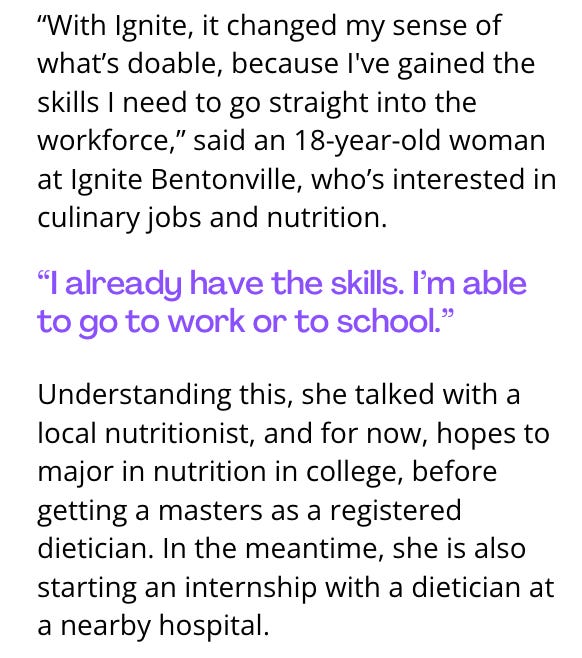
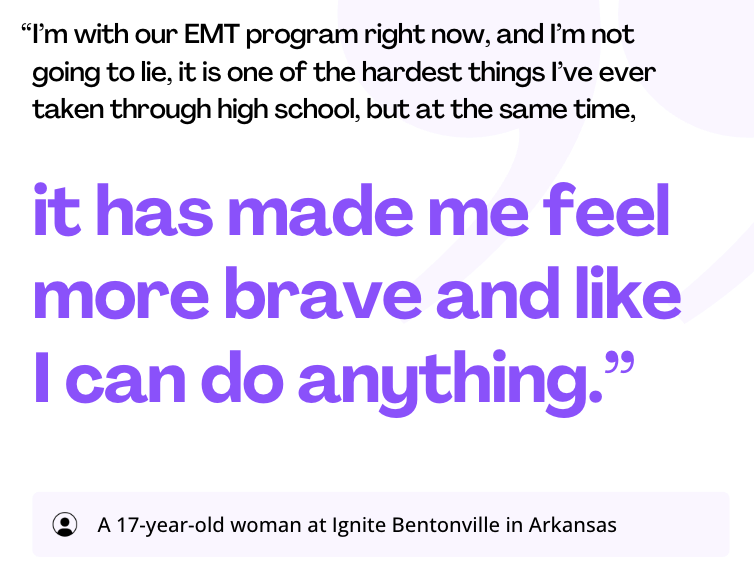
Our research shows that the answer to Gen Z’s preparedness paradox is, ironically, to stop preparing in the traditional sense, and to just get started. The young adults we spoke to made clear that the key to building confidence is starting before there’s a roadmap to justify the best path forward.
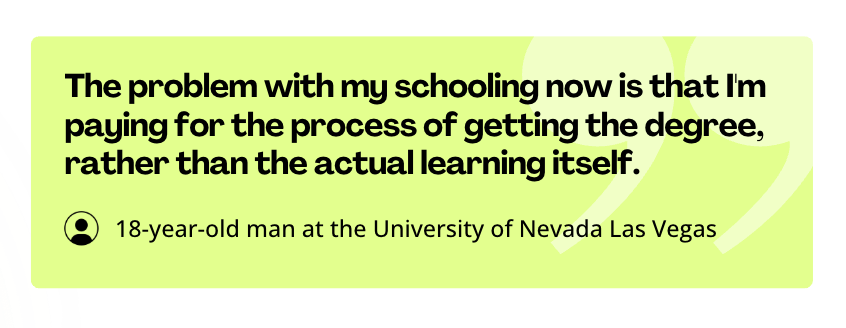
When we asked the young adults in our listening sessions what they felt helped push their futures forward most, an 18-year-old student at the University of Nevada Las Vegas put it bluntly:
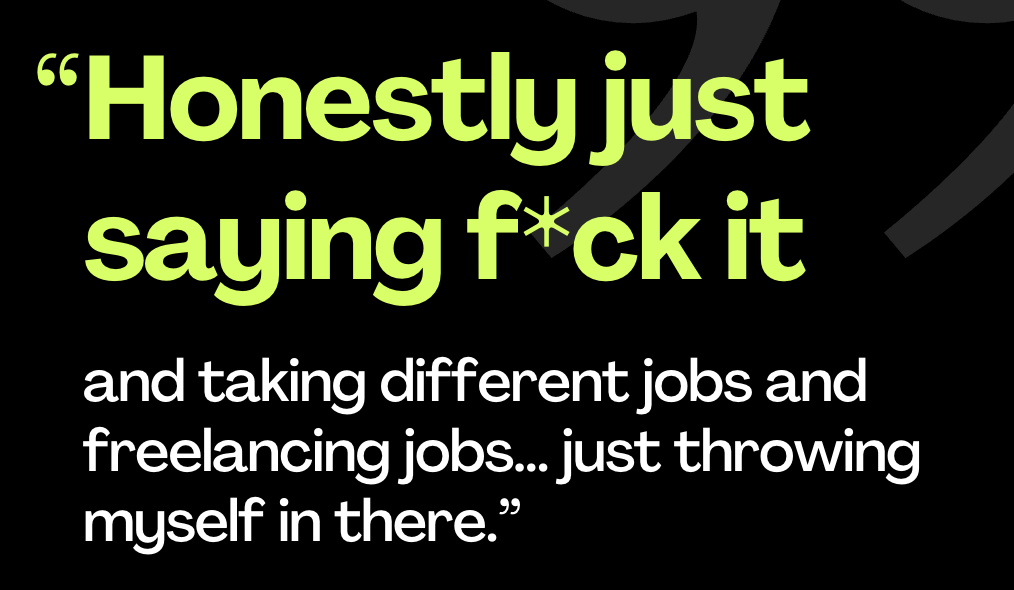
He mentioned helping with digital marketing for a local music festival.
“That was so out of my view... and I’ve learned so much from that, [rather] than sitting in my lecture.”
What this student meant by saying “f*ck it” was not to throw caution to the wind and screw the system, but rather, to trust his intuition and test the waters in a practical work environment. There’s little downside to that approach; it’s just as important to know what you don’t want to do as it is to know what you do.
There are clear, existing examples for how to foster this attitude and mindset amongst young adults who will benefit from it. And the responsibility to do so falls on young adults themselves, as well as their mentors, institutions, and employers.
That looks like leaning into pre-professional programs, celebrating extracurricular jobs (not highly curated or fancy ones that align with one’s degree, but real ones, like babysitting, being a summer camp counselor, scooping ice cream — that don’t require any credential), and encouraging that young adults take on work that might deviate from a young adults “brand.”
All of this encourages students to push back against their anxiety — AI and otherwise — by learning to be adaptable, to work with their hands, and to embrace the fact that the real world is often a little bit messy. And sometimes, they’re going to need to just say “f*ck it.”
I only point this out because it seems to be your main argument: You have a big typo in this sentence: "Our research shows that the answer to Gen Z’s preparedness paradox is, ironically, to start preparing in the traditional sense, and to just get started." Shouldn't that be "to stop preparing in the traditional sense?" Thanks for all you do!
Very informative report