

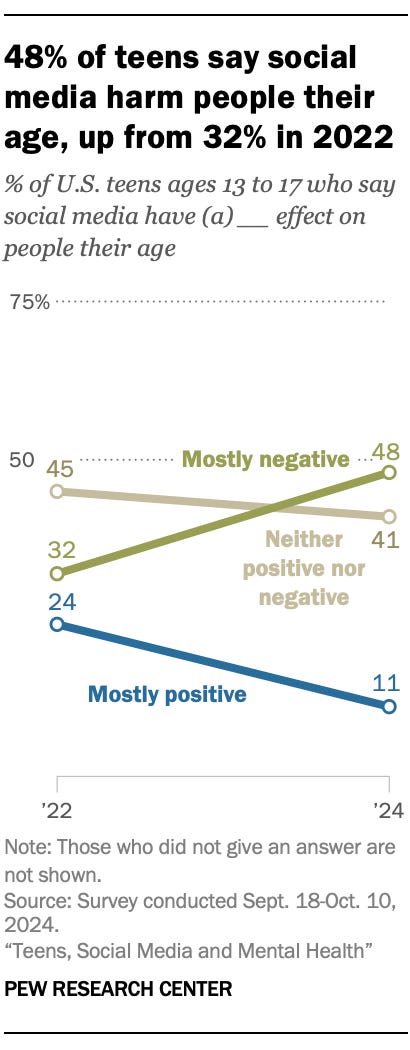
We know that young adults have a complicated relationship with social media. One in five U.S. teens say they are on TikTok almost all the time, according to a new Pew Research Center report. But many also hate the way social media makes them feel. Nearly half of U.S. teens said social media harms people their age, according to a separate Pew study released in April.
This is a recent spike. In 2022, just 32% of teens ages 13-17 said social media had a negative effect on people their age, according to a Pew study at the time. But in their spring report, 48% of teens age 13-17 said the same – a 16-point jump in a three year time span.
In listening sessions, young people often describe social media as a vice: something they know isn’t always good for them, but that they have a hard time restricting.
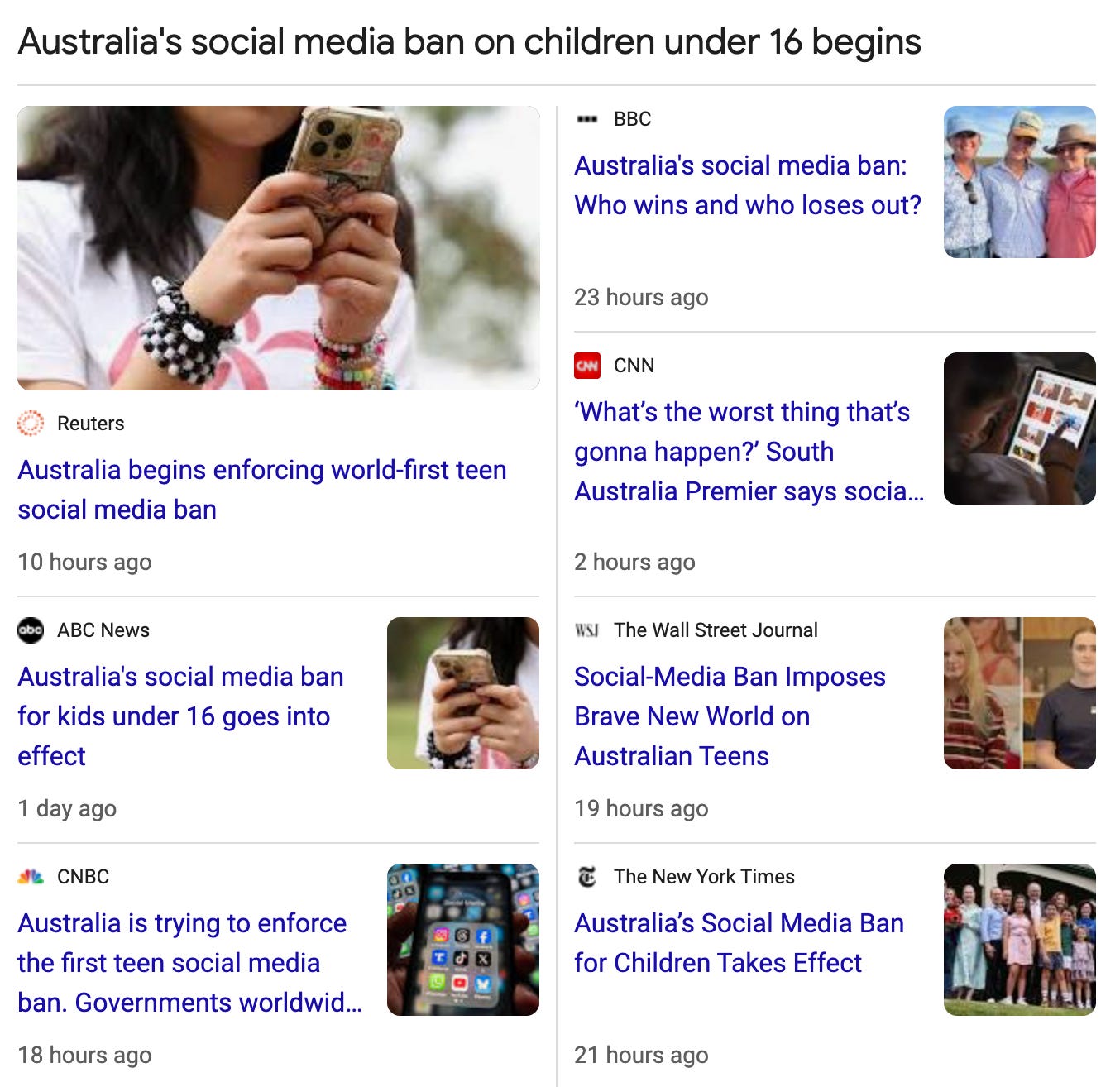
Well, Australia just became a global pioneer hoping to push back against that — banning social media for kids under 16. The first-of-its-kind law is the most ambitious national measure meant to protect young people from the harms of their social media habits.
How does it work? In short, the law requires social media companies to disconnect accounts for any Australian children under the age of 16, and companies that don’t comply could be fined millions of dollars. It’s the boldest state-sanctioned tech regulation to date.
As social psychologist and author of ‘The Anxious Generation’ Jonathan Haidt, who extensively tracks the impact of social media on young adults’ mental health, wrote in his After Babel newsletter:
“Under the new policy, children under age 16 can still watch videos, read posts, and look things up online. What changes is that some of the largest companies on earth can no longer form business relationships with young children or use their personal data to keep them hooked on feeds, likes, and alerts.”
The new law has some young fans, too.
“We deserve the chance to figure out who we are without algorithms telling us what to like, what to think and how to feel,” a 12-year-old named Flossie said about the new law, alongside the Australian prime minister yesterday, according to The New York Times.
But there’s also, naturally, some angst. The law’s drawn ire from those who say it violates individual rights or will make the internet more dangerous for young people who circumvent the guardrails and occupy dark corners of the internet as a result.
So what? As the controversial measure takes effect, young people in the United States are debating the merits of social media and phone bans here at home.
Is there an appetite for a similar measure here in the United States? In short, yes. In fact, I think people underestimate how popular these policies could be with young Americans. Gen Z 2.0 saw what social media did to their older siblings, and they want a different outcome. Similarly, older Gen Zers see the impact social media’s had on their lives, and don’t want the same for their younger peers.
While I find it hard to imagine the U.S. adopting an outright social media ban for kids like Australia’s, cell phone bans are on the rise in schools across the country, thanks in part to the work of advocates like Haidt. The movement has political allies across the aisle from Arkansas Governor Sarah Huckabee Sanders to New York Governor Kathy Hochul and Democratic Rep. Jake Auchincloss (who recently introduced an ‘UnAnxious Generation’ package of laws meant to curb the harms of social media and AI).
Let’s be clear, a school phone ban and an outright social media account ban for anyone under 16 are two entirely different things. But phone bans are one way to push back against young people’s social media addictions.
I’ve seen school phone bans first-hand, and they work. When I visited Ignite Bentonville, a preprofessional studies program affiliated with the Bentonville, Arkansas K-12 school system last spring, I was struck by their new no phone policy. Now, across Arkansas’ public schools, there’s a statewide “Bell to Bell, No Cell” law. Arkansas is just one in 37 states that has either “passed laws to curb phone usage in K–12 schools or required school districts to adopt their own policies to similar effect,” according to The 74, which reports that there’s some early evidence these bans boost student performance in the classroom.
This is a debate we’re only beginning to scratch the surface of, but it’s struck a nerve in my conversations with young people. In listening sessions last week, members of The Up and Up community were quick to identify social media as a leading contributor to (if not fully the culprit of) Gen Z’s compassion recession — and suggested phone bans in schools as a possible way to rewire Gen Z’s social emotional norms.
Here’s some of what they had to say.
🔑 What You’ll Unlock: Highlights from this edition
In their words, what Gen Zers say about school phone and social media bans
How tech regulation could be the key to re-instilling empathy in a generation that’s lost it
The gender gap implications
